
How many units do you actually need?
Start with headcount, not guesswork. For construction crews, OSHA 1926.51(c) sets the ratio: one toilet for 20 workers or fewer, then one toilet seat and one urinal per 40 workers once you pass 20, dropping to one per 50 workers at 200 or more. A 15-person framing crew in Norman needs one standard portable toilet, full stop. Bigger jobs need real math, which is why we built a dedicated calculator page instead of cramming it here. Events run differently since foot traffic is heavier and shorter. A wedding at a Norman venue with 150 guests over four hours needs more capacity than a construction site with the same headcount over eight. Check the event restroom guide or the wedding-specific page if you're planning something with a guest list instead of a crew roster. Farms and agricultural operations fall under a separate standard entirely: OSHA 1928.110 requires field sanitation with potable water and toilets within a quarter mile walk of hand-labor employees, one facility per 20 workers. That's a different math problem than a job site, so don't borrow the construction ratio for a farm crew. See farm and agricultural restrooms for that setup.
What size and type of unit fits the job?
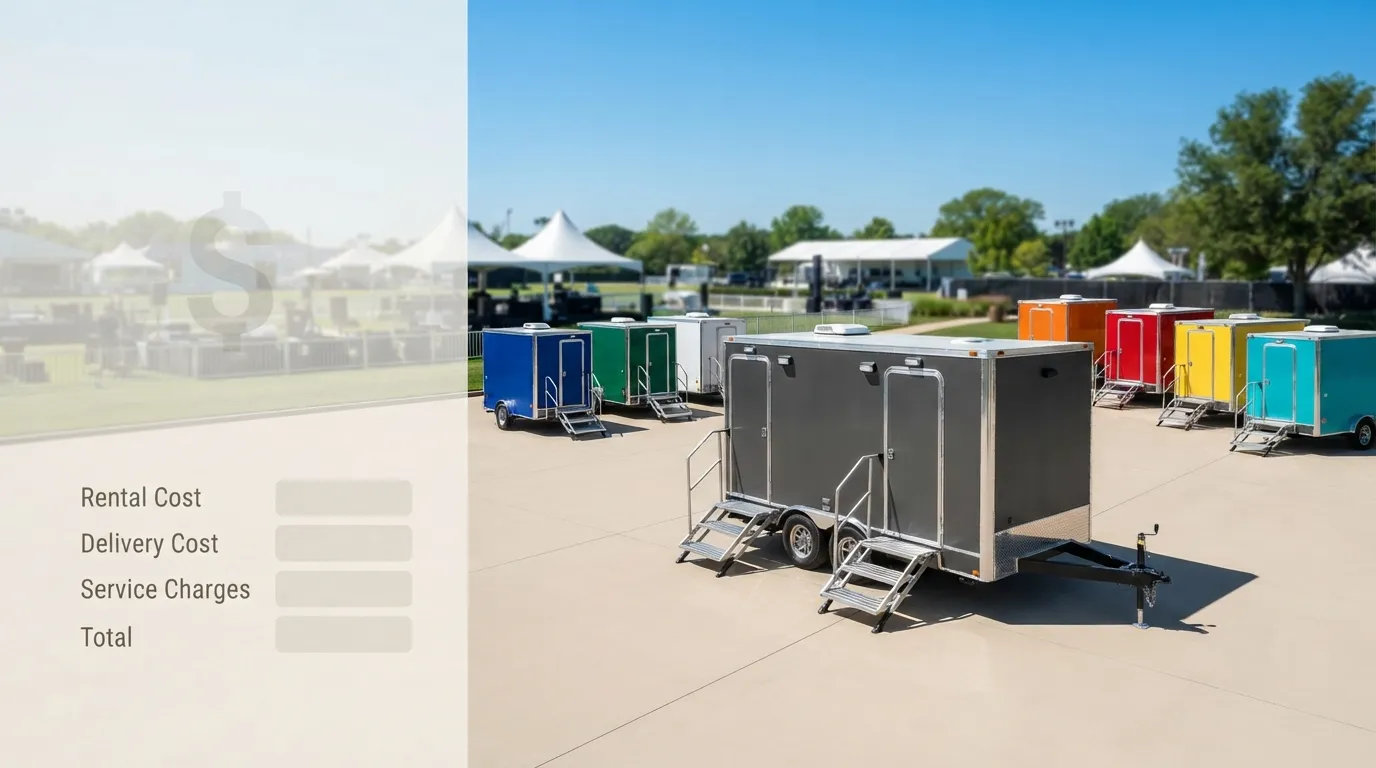
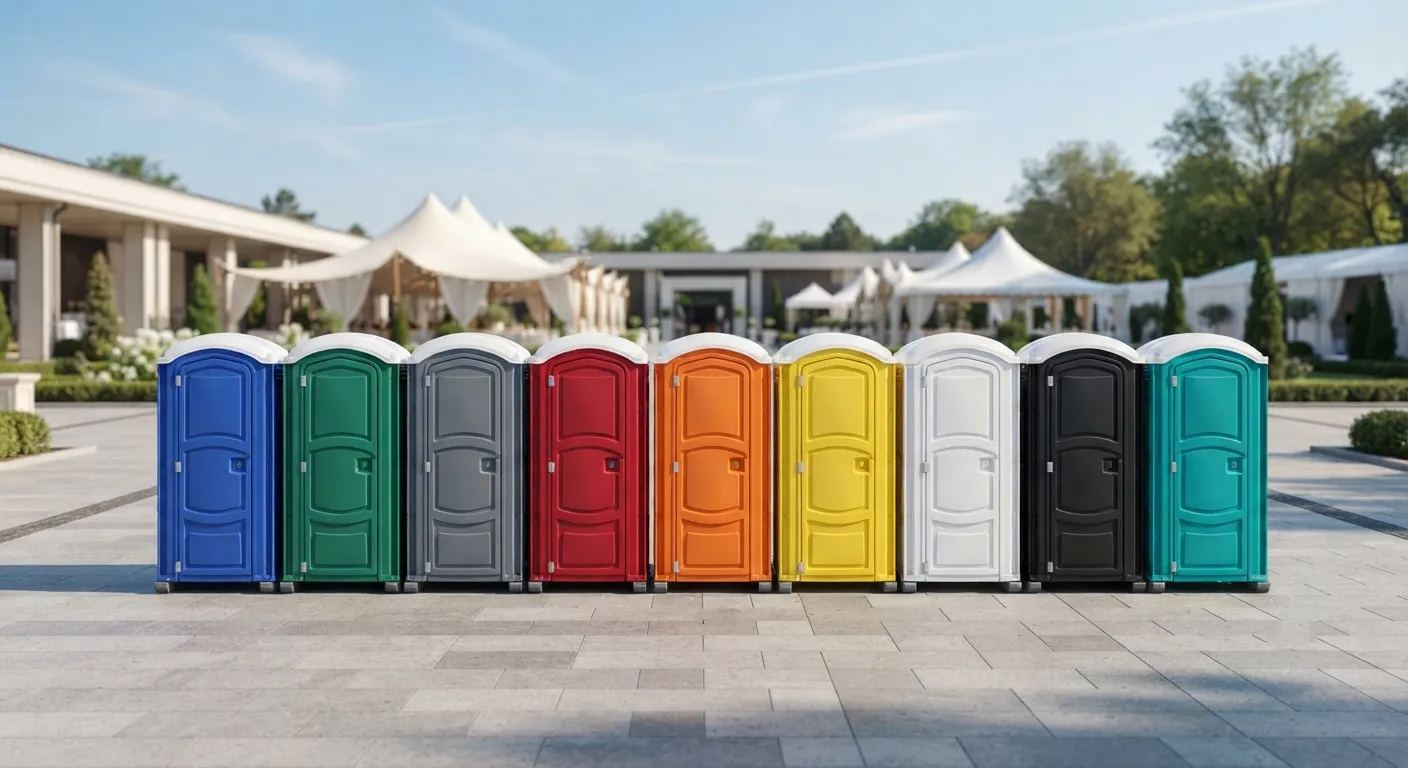
A standard unit measures about 44 by 48 inches on the ground and stands roughly 92 inches tall, with a 60 to 70 gallon holding tank. That's the workhorse for job sites and casual events. If you need something closer to a real bathroom, the deluxe flushable option steps up the experience without the footprint of a trailer. For guest counts over 100, or any event where image matters, a restroom trailer makes more sense, and Norman Porta Pros offers 2-stall, 4-stall and 8-stall configurations depending on scale. Every job needs at least one accessible unit under ADA Standards section 213.2, which requires 5 percent of clustered single-user units to be accessible, with a minimum of one no matter how small the cluster. An ADA accessible unit needs a 60 inch turning circle per section 304.3.1 and a clear route at least 36 inches wide per section 403.5.1, so check your ground layout before delivery day, not after. If your job involves paint, coatings, herbicides or insecticides, OSHA 1926.51(f)(1) kicks in and requires washing facilities beyond a standard toilet. A handwashing station covers that requirement.
Where should the unit actually sit?
Flat, stable ground within reach of the delivery truck, away from doorways and windows, and close enough for weekly service without blocking traffic. ADA Standards section 302.1 requires the surface itself to be stable, firm and slip resistant, which rules out soft dirt or gravel that shifts under foot traffic. Leave clearance for the truck too: roll-off deliveries need about 60 feet of straight clearance behind the truck, and portable toilet trucks need similar room to maneuver on tighter Norman lots. If you're near a public sidewalk or street, placement in the right of way needs confirming with the City of Norman before delivery, since we don't have a citywide rule to point you to here. Our full placement guide walks through spacing, wind direction and ground prep in more detail. Winter jobs in Norman add another wrinkle: freezing temps affect tank chemistry and service intervals, covered on the winter rental page. If you're renting for a job near Noble, 8.8 miles south of Norman, or Moore, 14.7 miles northwest, delivery routing is straightforward, but always confirm your address falls inside our standard coverage before you lock a date.
When should you book and how long do you need it?
Book at least a week out for standard jobs, two weeks for weekend events, since weekend delivery runs a premium rate compared to weekday scheduling. A single-day rental for a small backyard project sits at the low end of the daily cost range, while a multi-week job site rental averages higher per week but lower per day than renting fresh units daily. Monthly renters get the best per-day value, detailed on the monthly rental page. Service frequency matters just as much as duration. ANSI/PSAI Z4.3 sets the baseline at one service visit per week for up to 10 users across a standard 40 hour work week, so a crew of 25 needs more frequent pumping than that baseline assumes. Confirm your service schedule with Norman Porta Pros before signing, especially for events where guest counts spike over a few hours. If your project also needs debris removal, pair your restroom order with a dumpster rental, and if it's a working farm or job site with a septic tank on site already, a 1,000 gallon residential tank typically needs pumping every 3 to 5 years depending on household size and usage, per standard septic pumping guidance.
How far in advance should I book a porta potty in Norman?
Ten to fourteen days covers most standard jobs and gives Norman Porta Pros room to route delivery efficiently. Weekend events need two to three weeks since weekend slots fill first. Last-minute needs aren't hopeless. Check emergency rental options if your timeline is already tight.
Do I need an ADA-accessible unit for a small event?
Yes, even a small cluster needs one. ADA Standards section 213.2 requires at least one accessible unit regardless of total cluster size, and 5 percent of larger clusters. There's no small-event exemption, so build it into your order from the start.
How often does a rented unit get serviced?
Weekly service is standard for baseline usage under ANSI/PSAI Z4.3, covering up to 10 users over a 40 hour week. Heavier use needs more frequent visits. Ask about your specific schedule when you request a quote so pricing reflects real usage.
What's the difference between a standard and deluxe unit?
A standard unit is the basic 44 by 48 inch footprint with a 60 to 70 gallon tank, built for job sites. A deluxe flushable unit adds flush mechanics and a nicer interior, better suited to events where guests notice the difference.
Can I rent just a handwashing station without a toilet?
Yes, standalone handwashing stations are common for food vendors and paint crews. 29 CFR 1910.141(d)2 requires soap and towels or a hand-drying device, not just sanitizer. See the handwashing station page for standalone options.
Next step
Get a delivery date
Tell us the address, the dates and the headcount. We size the order and confirm the route.