
How many restrooms does a race actually need?
Start with the field size, then split it. A 5K with 400 runners needs fewer units than a half marathon with the same field, because a 5K clears the course in under an hour and a half marathon spreads bathroom demand over two or three hours. How Many Porta Potties Do I Need in Norman, OK walks through the math event by event, but the short version: cluster units at the start line, place a smaller group at each aid station, and double up at the finish where finishers and spectators mix. OSHA's construction ratio in 1926.51(c) - one toilet per 20 workers - doesn't map cleanly to race crowds, but it's the same logic: more people means more fixtures, and waiting lines longer than a few minutes cost you goodwill and post-race reviews. For most road races in Norman, standard portable toilets handle the bulk of the course, with a deluxe flushable unit or two near the VIP or sponsor tent. Add ADA accessible units at every cluster point, not just the start - ADA Standards section 213.2 requires at least 5 percent of clustered single-user toilets to be accessible, with a minimum of one per cluster, and race organizers in Norman should plan for that at each aid station, not just headquarters.
What do race organizers need besides toilets?
Water stations and timing equipment usually need power, and that's where a lot of race directors get caught flat-footed. If you're running a light tower or a PA system off a temporary power pole, brace it before race morning, not during setup chaos. Knowing how to brace a temporary power pole matters here: the pole needs to stand against wind gusts and against runners or volunteers bumping it in the dark, so guy-wire it at two or three points and anchor the base plate so it can't rock on uneven ground. Pair it with a light tower for pre-dawn starts, since most marathons in Oklahoma begin before sunrise to beat the heat. You'll also want handwashing stations at aid stations where volunteers handle food and cups, since crews serving gels, oranges or electrolyte cups benefit from a sink nearby even though OSHA's 1926.51(f)(1) washing requirement is specific to paint, coatings, herbicides and insecticides work, not food service. If your course crosses through a construction zone or a venue under renovation, coordinate with construction site services so barricades and units don't collide. For finish-line crowd management, crowd control barriers or a stretch of temporary fencing keeps spectators off the chute without blocking restroom access.
Where should restrooms go along the course?
Placement matters as much as count. Units need level, stable ground - ADA Standards section 302.1 calls for surfaces that are stable, firm and slip resistant, which rules out soft shoulders or loose gravel on race day. Each ADA unit needs a 60 inch turning circle in front of the door per ADA Standards section 304.3.1, so don't tuck accessible units into narrow gaps between barricades. The porta potty placement guide covers clearance and delivery access in more depth, but the short list for race day: keep units off the runners' actual path, place them where a service truck can reach without crossing the course, and cluster them in twos and threes rather than spreading single units thin. If your race starts or finishes at a location with its own restroom access, event restroom rental planning should still cover the gap for anyone who can't reach an indoor bathroom mid-race. Races that draw from Norman and pull runners from Noble, 8.8 miles south, or Moore, 14.7 miles northwest, often see overflow parking well past the start line, so plan a restroom cluster there too, not just at the corral.
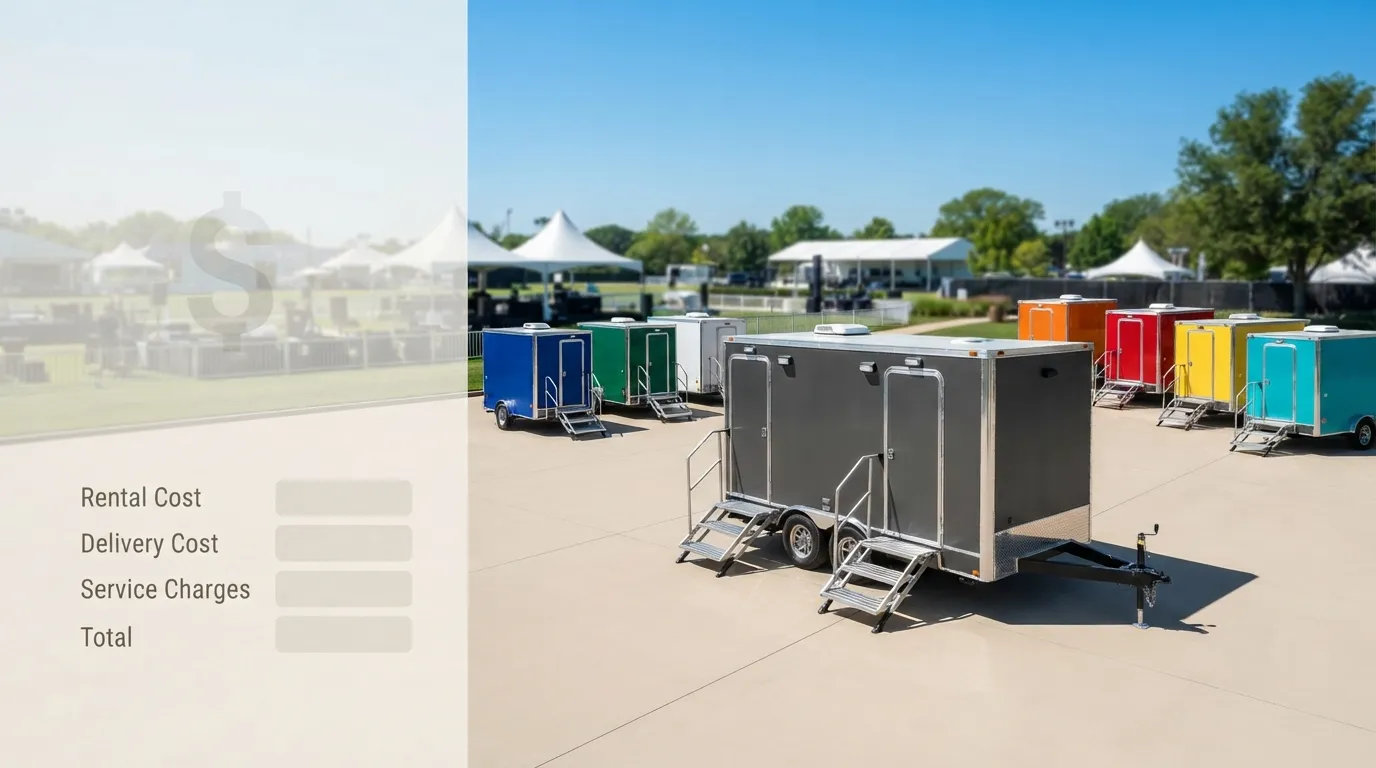
Pricing runs by event size and duration. A weekend race typically falls in this range:
| unit | duration | typical price |
|---|---|---|
| standard | weekend | $250 |
| standard | event | $400 |
| ada | weekend | $240 |
| deluxe | weekend | n/a - quote by day |
For multi-day festivals or race weekends with expo setup, monthly porta potty rental pricing structures sometimes work out cheaper than daily rates stacked over several days - ask when you request a quote.
How far in advance should I book race restrooms?
Book as soon as your course map and field size are set, ideally 60 to 90 days out for larger races. Norman's race calendar gets busy in spring and fall, and popular delivery windows fill first. Request a quote early to lock your count and delivery time.
Can restrooms be moved mid-race for a rolling road closure?
Units can be repositioned during multi-day events, but not typically during an active race window. Plan fixed placements for race day and schedule any repositioning between event days instead.
Do I need ADA units even if my race doesn't expect wheelchair participants?
Yes. Spectators, volunteers and staff may need accessible units regardless of the runner field. ADA Standards section 213.2 sets the minimum ratio for any cluster of portable toilets.
What happens if my race runs into bad weather?
Units stay usable in rain or wind if anchored properly. Check porta potty in winter for cold-weather races, since freezing temperatures change servicing needs.
Can I get restrooms for a race that starts in Norman and finishes elsewhere?
Yes. Courses that start in Norman and finish near Moore or another nearby town can have restrooms staged at both ends. Talk through your route when you contact the team.
Next step
Get a delivery date
Tell us the address, the dates and the headcount. We size the order and confirm the route.