
How fast can you deliver during an emergency?
Speed is the whole point of emergency porta potty rental. When a neighborhood loses septic or water service after a storm, Norman Porta Pros treats it like the priority call it is. We are based to reach Norman fast, and we already cover ground toward Noble, 8.8 miles south, and Moore, 14.7 miles northwest, so staging equipment for a wider county response is not a stretch. A standard unit needs about 44 by 48 inches of ground space and stands roughly 92 inches tall, which matters when you are placing units on cracked driveways, gravel lots or a shelter's back lawn. For agencies running a shelter with hand-labor crews, farm and agricultural restrooms and field sanitation logic under OSHA 1928.110 both point to the same rule: one facility per 20 people, reachable within a quarter mile walk. That is a decent baseline even outside farm labor, and it is how we plan unit counts for a shelter or command post. We can also drop temporary fencing around a staging yard and bring in handwashing station rental units so relief workers are not relying on hand sanitizer alone, since 29 CFR 1910.141(d)(2) calls for actual soap and towels or a drying device, not sanitizer as a substitute.
What if the septic system itself failed?
Disaster response is not only about portable toilets. A lot of storm damage hits septic systems directly, cracking lines or flooding a leach field until the tank cannot be pumped normally. That is where septic pumping service and emergency septic service come in alongside restroom units. A typical residential tank holds around 1,000 gallons and normally gets pumped every 3 to 5 years, but a flood event can force an out-of-cycle pump-out to keep sewage from backing into a house. If the tank is unusable for days while repairs happen, a holding tank rental can bridge the gap so a family is not without a working bathroom. Restaurants and shelters running commercial kitchens after a disaster also need to watch grease buildup; grease trap pumping becomes urgent once fats, oils, grease and solids reach 25 percent of the liquid depth in the interceptor. We move fast on all of this because Norman households and small businesses do not have weeks to wait when a tank backs up during recovery. For sites needing an actual accessible unit for displaced residents with mobility needs, ADA Standards section 213.2 requires at least one accessible unit in any cluster, and never fewer than 5 percent overall.
Where do you place units on a disaster site?
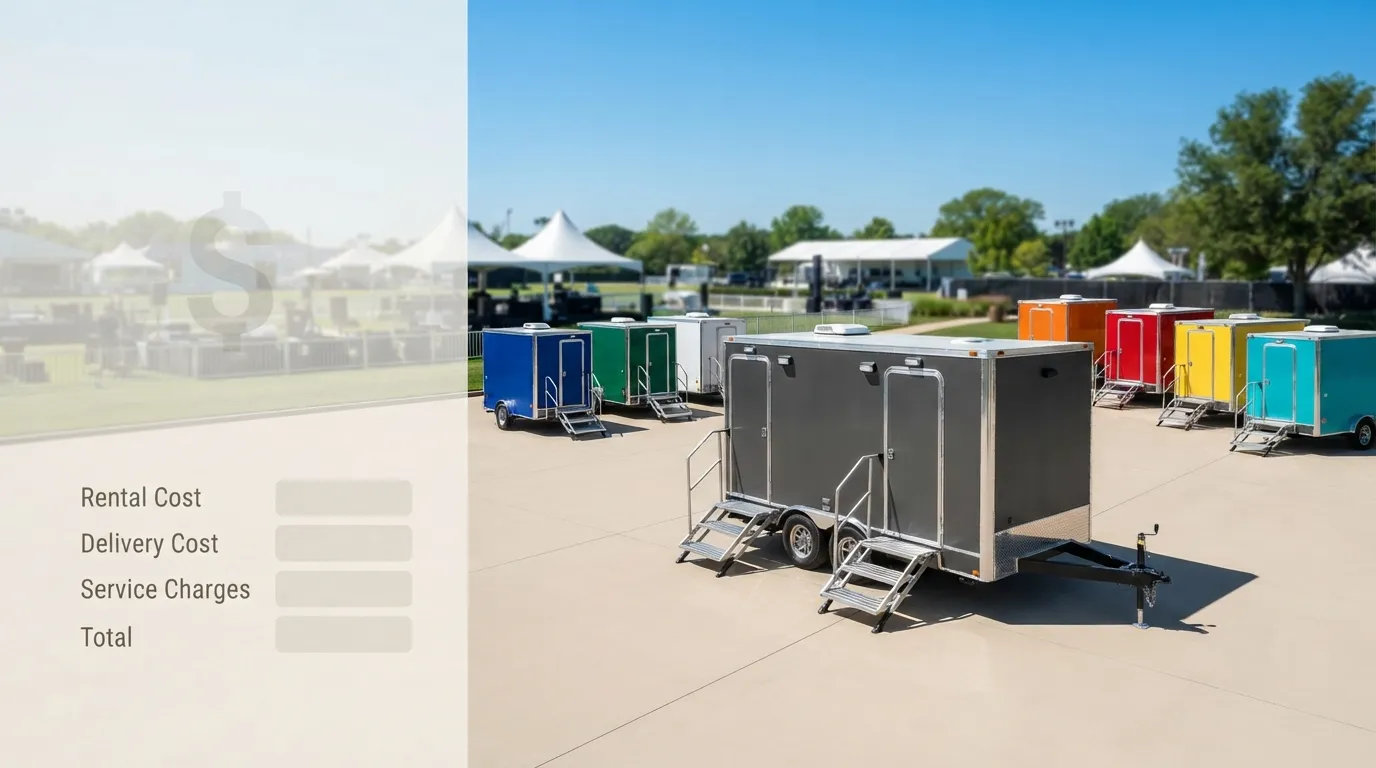
Placement in an emergency is less tidy than a construction job, but the same physical rules apply. Ground has to be reasonably stable and flat, echoing the slip-resistant surface standard in ADA Standards section 302.1, even if the surrounding area is torn up. If you are running a mixed shelter population, plan an accessible route at least 36 inches wide per ADA Standards section 403.5.1, and make sure any accessible unit door clears 32 inches per ADA Standards section 404.2.3. Our porta potty placement guide covers this in normal conditions, and most of it still holds in a disaster staging yard. If debris cleanup is part of the response, a roll-off dumpster rental clears storm debris fast, though OSHA 1926.25 housekeeping rules on clearing scrap still apply to any active work area, and OSHA 1926.252 covers debris chutes if crews are working off a damaged structure. Downed power lines often mean generators and light towers; we can pair units with a light tower rental or temporary power pole so crews working after dark are not doing storm cleanup in the dark. For displaced families needing secure storage for salvaged belongings, storage container rental is often part of the same delivery run as the restroom units.
How many units does a shelter or relief site actually need?
It depends on headcount and hours of operation, but OSHA 1926.51(c) is a fair starting ratio: one toilet per 20 people, scaling up from there. Our how many porta potties do i need guide walks through the math, and we will run the count with you over the phone before delivery.
Do you charge extra for emergency or after-hours delivery?
Rush and weekend delivery does run higher than a standard scheduled drop, since crews and trucks get pulled off other routes. We will quote the specific delivery fee for your timeline before we roll a truck, so there are no surprises once units are on site.
Can you supply restrooms for a temporary shelter, not just a job site?
Yes. Shelters get the same standard units used on construction sites, plus ADA accessible porta potty options and handwashing stations. We size the order to expected headcount and adjust as people arrive or leave.
What if our septic tank fails during a flood?
Call for septic tank pumping cost info and same-day scheduling where possible. A flooded or blocked tank can back up quickly, and a holding tank bridges the gap until the system is repaired or fully pumped.
Do you serve areas outside Norman during regional disasters?
Yes. We already reach Noble at 8.8 miles and Moore at 14.7 miles for routine service, and we extend that same coverage for disaster response when a wider area is affected.

Next step
Get a delivery date
Tell us the address, the dates and the headcount. We size the order and confirm the route.